Mastering the Corporate Marketing Business Card Layout for Professional Branding
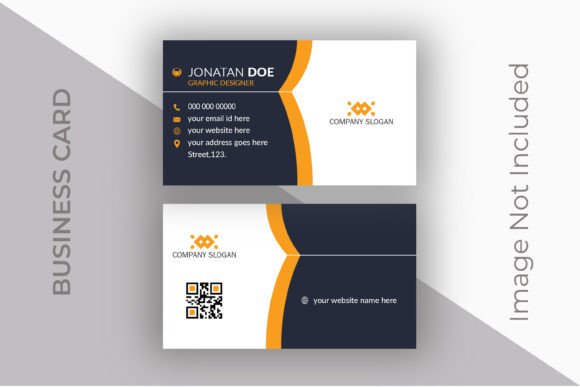
In the fast-paced ecosystem of modern business, the initial exchange of contact information often dictates the trajectory of a professional relationship. While digital connectivity dominates daily communication, the tangible impact of a physical business card remains unmatched in corporate settings. A well-executed Corporate Marketing Business Card Layout serves as more than just a vessel for phone numbers and email addresses; it is a compact brand ambassador that communicates credibility, attention to detail, and organizational identity. Integrating a high-quality, customizable design into your workflow ensures that every networking opportunity translates into a lasting impression.
The foundation of an effective card lies in its technical precision. The industry standard dimensions for a business card are 3.5 x 2 inches, but successful print production requires understanding the concept of bleed. A robust layout includes a bleed setting of 0.25 inch, extending the total canvas to 3.75 x 2.25 inches. This extra margin is critical; it ensures that when the cards are cut down to their final size, there are no unsightly white edges or misaligned borders. When selecting a design template, verifying these dimensions is the first step in a quality control process that prevents costly printing errors and ensures a polished final product.
Integrating Design Assets into Your Creative Workflow
Adopting a pre-designed yet fully editable layout streamlines the branding process for marketers, entrepreneurs, and freelancers alike. Rather than starting from a blank canvas, which can be time-consuming and prone to proportion errors, utilizing a structured file allows you to focus on content strategy and brand alignment. The ideal asset for this purpose is a Print Ready Format delivered as a well-layered, organized PSD file. This format offers the flexibility needed to adapt the design to specific corporate identities without sacrificing structural integrity.
When working with a file compatible with Adobe Photoshop CS6 or later versions, the workflow becomes significantly more efficient. These files typically utilize Smart Objects for key visual elements such as logos, QR codes, and profile photos. Smart Objects are non-destructive; they allow you to replace the placeholder image with your own asset while automatically retaining the original scaling, warping, and filter effects applied by the designer. This feature is invaluable for maintaining consistency across different team members' cards. For instance, a marketing director can swap out a logo in seconds, knowing it will fit perfectly within the designated vector shape layer without needing to manually adjust resolution or positioning.
Furthermore, the inclusion of vector shape layers ensures that graphical elements remain crisp regardless of scaling. Unlike raster images, which can pixelate when enlarged, vector shapes maintain sharp edges, contributing to a premium look and feel. This distinction is crucial for corporate marketing materials where perceived quality directly influences client trust. By leveraging a template that separates text, background, and graphical elements into grouped layers, users can navigate the file intuitively, reducing the learning curve and accelerating the time-to-market for new printed materials.
Technical Specifications and Print Preparation
The transition from digital design to physical print is where many projects falter due to overlooked technical details. A professional Corporate Marketing Business Card Layout must adhere to strict resolution and color standards to guarantee optimal output. The gold standard for print resolution is 300 DPI (dots per inch). Designs created at lower resolutions may appear sharp on a computer monitor but will result in blurry or jagged text when printed. Ensuring your source file operates at 300 DPI is a non-negotiable step in the preparation phase.
Color management is another pivotal factor. While screens display colors in RGB (Red, Green, Blue), most commercial printers operate using CMYK (Cyan, Magenta, Yellow, Key/Black). However, many modern design templates are provided in RGB to maximize the color gamut available during the editing phase, with the expectation that the printer or pre-press software will handle the conversion. It is essential to communicate with your printing provider regarding their specific color profile requirements. If the template allows, converting the document to CMYK before export can give you greater control over how specific brand colors translate to ink, preventing unexpected shifts in hue that could dilute brand recognition.
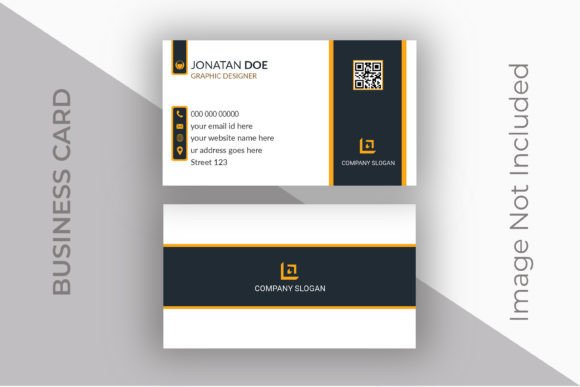
Typography also plays a significant role in readability and aesthetic appeal. High-quality templates often utilize free fonts that are commercially safe to use, eliminating licensing hurdles. When customizing the text, it is vital to maintain the hierarchy established in the original design. The font sizes and weights are chosen to guide the viewer's eye logically—from the name and title to the contact details and call-to-action elements like QR codes. Altering these proportions arbitrarily can disrupt the visual balance, making the card appear cluttered or unprofessional. Always preview your text edits at 100% zoom to ensure legibility and proper kerning.
Customization Strategies for Diverse Business Needs
The versatility of a layered PSD file extends beyond simple text replacement. It allows for deep customization that aligns with various roles within an organization. For a sales team, the front of the card might emphasize a personal photo and a direct mobile line, while the back could feature a QR code linking to a calendar booking page or a specific product landing page. For executive leadership, the design might prioritize minimalism, focusing on the company logo and a prestigious title, with contact details kept subtle on the reverse side.
QR codes have become an integral component of modern business cards, bridging the gap between physical and digital realms. In a well-organized template, the QR code is placed within a dedicated smart object layer. This allows you to generate a dynamic QR code pointing to your LinkedIn profile, digital portfolio, or vCard, and insert it seamlessly. Because the layer is pre-positioned and sized, you avoid the common pitfall of placing a code too close to the trim edge, where it might get cut off, or making it too small to be scanned reliably by smartphones.
Consistency across an organization is achieved through the "grouped layered" structure of professional files. When rolling out new cards for an entire department, a central administrator can open the master PSD, duplicate the artboard or file, and swap out individual details while keeping the core design elements locked. This method ensures that every employee carries a card that looks like it belongs to the same family, reinforcing brand unity. The inclusion of both EPS and JPG formats in the download package further enhances utility. The EPS file provides a vector-based alternative for users who prefer Illustrator or need to scale elements independently, while high-resolution JPGs serve as excellent digital proofs for email signatures or virtual meeting backgrounds.
Ensuring Long-Term Usability and Efficiency
Investing in a high-quality, editable template is a strategic decision that pays dividends over time. As businesses evolve, so do their contact details and branding guidelines. A well-structured file future-proofs your marketing collateral. Should the company undergo a rebrand, change its address, or update its tagline, the source PSD file allows for immediate updates without the need to commission a new design from scratch. This agility is particularly beneficial for small business owners and freelancers who must manage their own marketing assets efficiently.
Organization within the file structure cannot be overstated. Layers named logically (e.g., "Logo," "Name Text," "Background Texture") save hours of frustration compared to working with flattened or poorly labeled files. This organization facilitates easier collaboration if you need to hand off the file to a print shop or a colleague for final adjustments. Moreover, keeping the original source file archived ensures that you always have a master copy to return to, preventing the degradation of quality that occurs when saving over JPEGs repeatedly.
Ultimately, the goal of utilizing a Corporate Marketing Business Card Layout is to remove technical barriers so you can focus on the substance of your networking. By choosing a template that offers full editability of text, fonts, and colors, along with smart object integration for visuals, you empower yourself to produce professional-grade materials in-house. Whether you are preparing for a major trade show, updating your team's credentials, or launching a new venture, the right design asset acts as a catalyst for professional growth. It transforms the mundane task of printing cards into a strategic exercise in brand building, ensuring that every handshake is supported by a tool that reflects the highest standards of your business.