Maximizing Local Reach with an Internet Broadband Promotion Postcard
In the competitive landscape of telecommunications, internet service providers (ISPs) constantly search for marketing channels that cut through digital noise to reach local households effectively. While online ads and social media campaigns have their place, tangible direct mail remains a powerful tool for building trust and driving conversions in specific neighborhoods. An Internet Broadband Promotion Postcard serves as a strategic bridge between your high-speed services and potential customers who are actively seeking better connectivity solutions. By leveraging a well-designed physical medium, ISPs can communicate value propositions clearly, highlight speed upgrades, and offer exclusive sign-up incentives that demand attention.
The primary challenge for many broadband marketers is not just reaching an audience, but ensuring the message is retained long enough to prompt action. Digital banners are often scrolled past in seconds, and email promotions frequently land in spam folders or go unread. A physical postcard, however, occupies real space in a customer's home. It sits on the kitchen counter or the entryway table, serving as a persistent reminder of the service upgrade available to them. The goal here is simple: to convert interest into installation appointments by presenting a professional, clear, and compelling offer that addresses the specific pain points of slow speeds, unreliable connections, or high costs.
Why Direct Mail Works for Broadband Services
When considering how to promote internet packages, it is essential to understand the psychology of the consumer. Homeowners and renters alike view their internet connection as a utility as critical as electricity or water. When service is spotty or speeds are sluggish, it creates immediate frustration affecting work, education, and entertainment. An Internet Broadband Promotion Postcard allows you to speak directly to these frustrations. Unlike a generic billboard, a postcard can be tailored to specific zip codes, allowing you to target areas where fiber optics have just been installed or where competitor dissatisfaction is known to be high.
The effectiveness of this approach lies in its simplicity and tangibility. A standard 6x4 inch postcard is large enough to display key information—such as download speeds, pricing tiers, and a clear call to action—without overwhelming the reader. It provides a focused canvas where every element contributes to the conversion goal. For an ISP, this means highlighting the most attractive aspects of your service, such as "No Data Caps," "Free Installation," or "Gigabit Speeds," in a format that is easy to digest at a glance.
Designing for Impact and Clarity
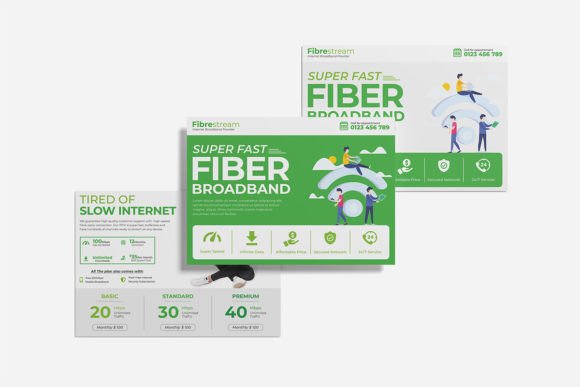
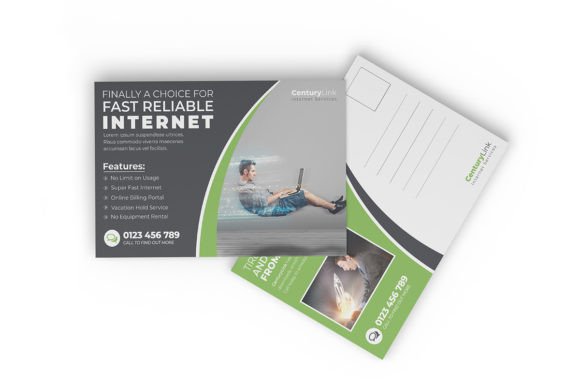
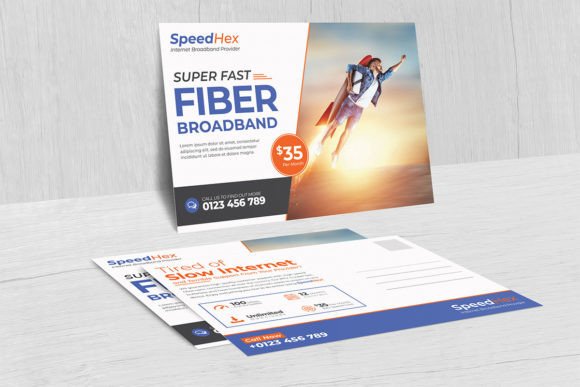
Creating a successful campaign starts with the design itself. A cluttered or amateurish layout can undermine the perceived reliability of your network. This is where utilizing a professional Internet Broadband Service Provider Marketing Postcard Template becomes invaluable. These templates are engineered to meet industry printing standards, ensuring that the final product looks crisp and authoritative. Key technical specifications, such as CMYK color mode and 300 DPI resolution, guarantee that images and text appear sharp when printed, avoiding the blurry or pixelated look that can deter potential customers.
Furthermore, proper preparation for print is crucial to avoid costly errors. A quality template includes necessary bleed areas, typically around 0.25 inches, which ensures that background colors and images extend to the very edge of the card after cutting. Without this, white borders may appear, ruining the professional aesthetic. By starting with a file that is already print-ready and organized with guidelines, marketing teams can focus entirely on the messaging rather than wrestling with technical design constraints. The use of free, accessible fonts like Montserrat ensures that the typography is modern and legible across all devices and print outputs, maintaining brand consistency without licensing headaches.
Tailoring the Message to Different Audiences
One size does not fit all in broadband marketing. Different demographics respond to different triggers, and a versatile Internet Broadband Promotion Postcard allows for customization based on the target audience. For instance, families with school-aged children may prioritize reliable upload speeds for video conferencing and homework. In contrast, gaming enthusiasts and streamers are likely more interested in low latency and high download caps. Remote workers, another significant demographic, need assurance of uptime and stability.
By using an editable template, ISPs can easily swap out headlines and imagery to resonate with these specific groups. You might create one version of the postcard highlighting "Perfect for Remote Work" with an image of a home office setup, and another version emphasizing "Buffer-Free Streaming" with visuals of family entertainment. This level of segmentation increases relevance, making the recipient feel that the offer was crafted specifically for their lifestyle needs. The ability to edit layers in PSD files means that swapping text and images is a straightforward process, even for those with moderate design skills.
Practical Applications and Strategic Deployment
Once the design is finalized, the deployment strategy determines the return on investment. Direct mail campaigns work best when integrated with other marketing efforts. For example, include a unique promo code or a dedicated landing page URL on the postcard. This allows you to track exactly how many new subscribers came from the direct mail campaign versus other channels. Consider pairing the postcard drop with a localized digital ad campaign; when a resident sees the physical card and then encounters a matching banner ad online, the repeated exposure reinforces brand recall and trust.
Timing is also a critical factor. Launching a campaign at the beginning of the school year, during major sporting events, or when moving seasons peak can significantly boost response rates. Additionally, consider the geographic scope. If you are rolling out a new fiber network in a specific subdivision, saturating that area with postcards creates a sense of community adoption. Neighbors talking to neighbors about switching providers can amplify the effect of your initial mailing.
Implementation Tips for Success
To get the most out of your Internet Broadband Promotion Postcard, keep the following recommendations in mind:
- Focus on the Offer: Ensure the discount or incentive is the most prominent element on the card. Phrases like "First Month Free" or "$50 Off Installation" should grab immediate attention.
- Simplify the Call to Action: Make it incredibly easy for the customer to respond. Include a large, clear phone number, a short URL, and a QR code that leads directly to the sign-up page.
- Maintain Brand Consistency: Use your company's logo, color palette, and tone of voice to ensure the postcard feels like an official communication from a trusted provider.
- Test and Iterate: Do not hesitate to run A/B tests. Send two slightly different versions of the postcard to small sample groups to see which headline or image generates more responses before committing to a full-scale print run.
Ultimately, the goal is to provide a solution to the customer's connectivity problems while growing your subscriber base. A well-executed postcard campaign combines the tactile impact of direct mail with the precision of targeted marketing. By utilizing a robust Internet Broadband Promotion Postcard Template, ISPs can streamline their creative process, ensure professional quality, and deliver a message that resonates with local residents. In an era where digital fatigue is real, the simplicity and directness of a physical postcard can be the deciding factor that turns a prospect into a loyal customer.