Evaluating the Chef Hat Restaurant Logo Template Design for Your Brand
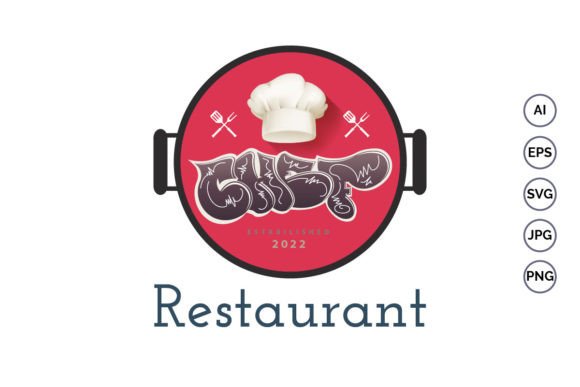
Selecting the right visual identity is a critical step in establishing a food service business. For many entrepreneurs and branding professionals, the Chef Hat Restaurant Logo Template Design represents a practical starting point. This specific type of asset offers a pre-structured graphical representation of culinary professionalism, typically centered around the iconic toque blanche. Understanding the scope, technical specifications, and strategic fit of such a template is essential before integrating it into a broader brand strategy.
Understanding the Asset and Its Components
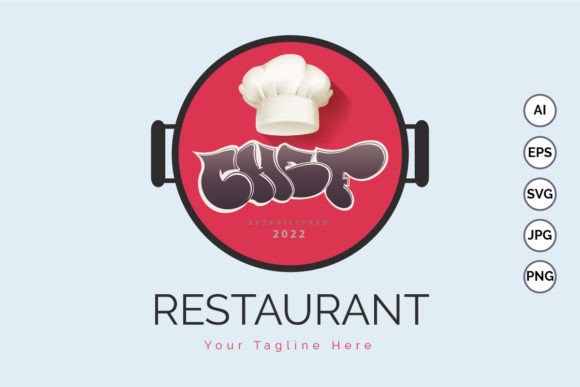
A chef hat restaurant logo template design is not merely a static image; it is a modular design file intended for customization. The primary value proposition lies in its adaptability. When evaluating a high-quality package, one must look beyond the preview images and examine the underlying file structure. A comprehensive file pack ensures that the user has full control over the final output, regardless of the medium where the logo will be displayed.
Typically, a robust package includes a variety of source files to accommodate different software environments and production needs. For instance, access to 1 Source File in EPS CC and 1 Source File in Ai CC is crucial for users working within the Adobe ecosystem. These vector formats allow for infinite scalability without loss of quality, which is vital for applications ranging from small business cards to large-scale signage. Additionally, the inclusion of 1 Source File in SVG CC ensures compatibility with modern web standards, allowing the logo to remain crisp on digital screens of any resolution.
For immediate use or for clients who do not possess vector editing software, the package usually provides rasterized versions. This often includes 4 File JPEG 300 ppi for standard print documentation and 1 File PNG Transparant Background 300 ppi for digital overlays. The 300 ppi resolution is an industry standard for high-quality printing, ensuring that the graphics do not appear pixelated when produced physically.
Strategic Benefits of Using a Template
The decision to utilize a chef hat restaurant logo template design often stems from a need for efficiency and cost-effectiveness. Custom logo design can be a time-consuming and expensive process involving multiple rounds of revision. A template mitigates these factors by providing a professionally composed base. The layout, proportions, and balance have already been established by a designer, reducing the risk of common aesthetic errors.
Furthermore, the editability of these files is a significant advantage. With tools like Adobe Illustrator, users can easily modify text, change color palettes, adjust layouts, and swap fonts. This flexibility allows a business to align the generic template with their specific brand personality. Whether the goal is to convey a sense of traditional fine dining through serif fonts and gold accents, or a modern bistro vibe with sans-serif typography and vibrant colors, the underlying structure supports these variations.
Another benefit is the speed of deployment. For pop-up restaurants, food trucks, or catering startups that need to launch quickly, having a ready-to-edit file means the branding phase can be completed in days rather than weeks. The ability to instantly generate high-resolution assets for menus, social media, and uniforms accelerates the go-to-market timeline.
Technical Considerations and Tradeoffs
While the benefits are clear, there are tradeoffs to consider. The most significant limitation is exclusivity. Because these templates are available for purchase by multiple parties, there is a possibility that another entity could adopt a similar or identical visual identity. For a local bakery, this may be negligible. However, for a franchise aiming for a unique global presence, the lack of exclusivity can be a deterrent.
Additionally, the ease of editing requires a certain level of technical proficiency. While the files are described as "easy editable," effectively manipulating vector nodes, managing layers in AI or EPS files, and ensuring color consistency across different formats (CMYK for print, RGB for web) requires familiarity with design software. Users without this expertise may find themselves limited to basic text changes, potentially failing to unlock the full potential of the customizable features.
It is also important to verify the software compatibility before purchase. Although the package lists support for Adobe Illustrator, EPS, and SVG, users relying on alternative software such as CorelDRAW or Inkscape should test the file compatibility. While SVG and EPS are generally universal, complex effects or specific font licensing embedded in AI files may not translate perfectly across all platforms.
Ideal Use Cases and Scenarios
The chef hat restaurant logo template design is a strong fit for several specific scenarios. It is particularly well-suited for small to medium-sized enterprises (SMEs) operating on a constrained budget. In these cases, the cost savings compared to hiring a dedicated branding agency allow funds to be redirected toward equipment, inventory, or marketing.
It is also an excellent choice for concept testing. Before committing to a permanent brand identity, a restaurateur might use a template to visualize how a chef hat motif looks on merchandise or storefronts. If the concept resonates with the target audience, they can later invest in a custom iteration based on the same principles. Furthermore, this asset is valuable for ancillary food businesses, such as culinary schools, cooking blogs, or food delivery services, where the chef hat serves as an immediate visual shorthand for culinary expertise.
When to Consider Alternatives
Conversely, there are situations where alternatives may be worth considering. If the brand strategy relies heavily on differentiation and unique storytelling, a custom-designed logo is preferable. A bespoke design ensures that every element, from the curve of the hat to the negative space, tells a specific story about the restaurant's heritage or cuisine style.
Moreover, if the business plans to scale rapidly or seek investment, investors often look for proprietary assets. A trademarked, unique logo holds more intellectual property value than a licensed template. In highly saturated markets where many competitors may use similar stock imagery, standing out becomes difficult with a template. In such environments, the risk of brand dilution outweighs the initial cost savings.
Making the Decision
Ultimately, determining whether the Chef Hat Restaurant Logo Template Design aligns with your goals requires an honest assessment of your resources and ambitions. Evaluate the provided file pack carefully: ensure the inclusion of EPS, AI, and SVG files meets your technical workflow. Consider whether the ability to easily edit text, colors, and layouts empowers your team or if the potential lack of exclusivity poses a long-term risk.
If the priority is rapid deployment, budget adherence, and functional professionalism, this template offers a compelling solution. However, if the objective is to build a distinct, trademarkable asset for a large-scale operation, the investment in a custom design route may yield higher returns. By weighing these factors against the specific needs of the culinary venture, stakeholders can make an informed decision that best supports their brand's future growth.